Showing posts with label Team Racing. Show all posts

Monday, May 6, 2013

Play 2 vs. Play 45

One of the most challenging and complicated matchups in team racing occurs when Play 2 faces off against Play 45 (also known as Play 4, etc.).  Play 2 is any combination, where your team’s top boat has the 2nd and 3rd spots, and any other position behind that, with the end goal being to finish in a 2-3-4, even though a 2-3-5 will still win a race.  Play 45 is any situation where your team has the 1 spot, and the remaining boats are in 4th and/or worse positions.  The end goal is to finish in a 1-4-5.  In other words, your team has a 1st place, and is not in a play 1.

Play 2:

2-3-4, 2-3-5, 2-3-6

Play 45:

1-4-5, 1-4-6, 1-5-6

Play 2 Overview:

As mentioned previously, the goal of Play 2 is to finish in a 2-3-4.  2-3-5 will still win, but mostly occurs as a fluke in high level team racing.  The reason for this, is that if the other team is in a 1-4-6, the 4th place boat in a will never finish before trying to boost the 6th place boat past the 5th place boat.  In other words, a 2-3-5 is a very unstable combination.  Thus, in a Play 2, you should never stop executing pass backs until you are in a 2-3-4.

A 2-3-4 is one of the strongest combinations in team racing, assuming that your team can stay balanced with the 5th and 6th place boats on the other team.  Play 2 is vulnerable, both upwind and downwind, when the other team is able to move towards two sides of the course, and the pairs are not able to come back together while remaining balanced.

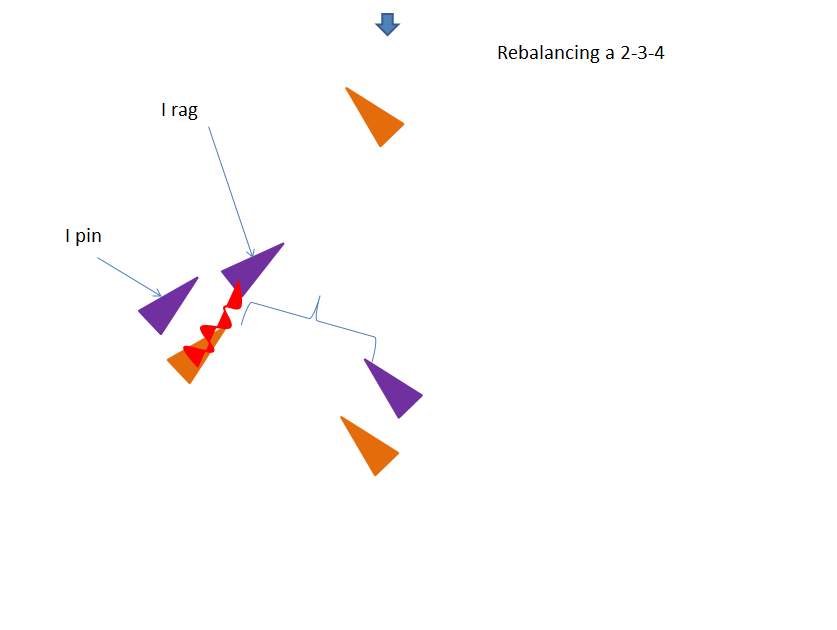
Generally speaking, in a 2-3-4, two boats will gain control of the 5th and 6th place boats on the opposing team, with the third member of the team helping to maintain balance between the pairs, or rescuing a teammate if they lose control of an opposing boat.




Play 45 Overview

Play 45 is less stable than Play 2, but is much less intricate in terms of balance.  The biggest mistake made by most teams in Play 45 is the 1st boat running away with the 1, leaving 3 boats vs. 2 boats behind them.  It is important that boat 1 retains 1st place.  However, they should remain close enough to keep one boat occupied, and should also remain poised to spring a Play 1, if the opportunity arises.

There exception to this is initially around the first offset leg, and early in the downwind leg.  If the 1st place boat lingers too close to the competition on those legs, that leaves the opportunity for the 2-3 to swallow him or her up downwind, and lose the 1 spot in the process.  Instead, on off wind legs, boat 1 should stay in a spot where she is just far enough to protect the 1, relying on her teammates to do their jobs.  She should set a mark trap at the leeward mark to bring the race together or to prevent 3 boats from ganging up on 2 boats behind her.  Her job moves back to normal following the leeward mark trap.

While the 1st place boat’s role is crucial, the most important dynamic of Play 45 occurs between the other two boats.  While the exact roles will change slightly depending on the precise combination, the ultimate goal is to put one boat on the other team in last.  Once this happens, have one boat (Boat 5) gap this boat separating her as far as possible from the rest of the race, while the other boat (Boat 4) pushes boats 2 and 3 up the course.

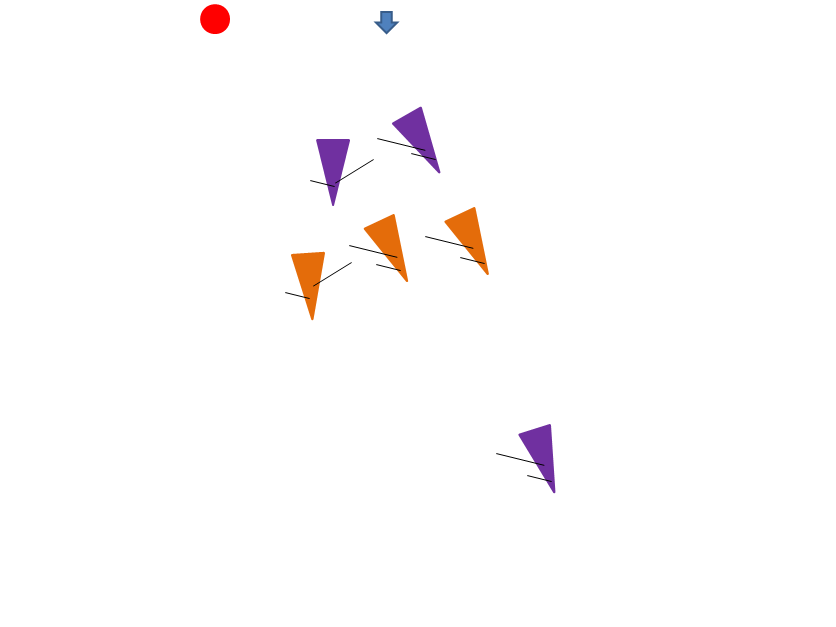
1-4-5 vs. 2-3-6

These are far and away the most interesting combinations to pair against each other in team racing.  In each of these combinations, each boat has a specific role, and the winner of the race is determined by which team executes their roles most efficiently.

Boat 1:

Hold onto the 1 spot, but stay close and connected, keeping boat 2 as uninvolved as possible from the play behind them.  Wait to spring a Play 1 if the situation presents itself.  On upwind legs, look for opportunities to pin boat 2, to keep them from helping the team balancing.

Boat 4:

Push boats 2 and 3 up the course.  Your job is to get as far ahead of boats 5 and 6 as possible, making it more difficult for boats 2 and 3 to boost boat 6 without leaving open a Play 1 opportunity.  If you are far enough separated, and boats 2 and 3 split to free up boat 6, move immediately to Play 1.

Boat 5: Your job is simple.  Gap boat 6, taking them as far away from the rest of the fleet as possible.  There are several reasons to do this.  The biggest reason is to keep boats 2 and 3 from having the ability to rescue boat 6.  If one of them goes back to help, they will leave a 1-3 in the front of the fleet, which is easy to convert to a 1-2.  Another reason you do this, is to act as an insurance policy if your team loses the 1 spot.  If this happens, you will automatically have an opportunity to move into a Play 2.

4-5 Wins:


--
Boat 2: 

You need to work with boat 3 to significantly slow boat 4 moving her as close to boats 5 and 6 as possible.  If the boats are all about even with each other, boat 2 and boat 3 will each be able to gain control of boats 4 and 5 without giving up their respective positions.  From here you will run the necessary pass backs to move into a 2-3-4.  Typically, you will want to move boat 6 into 2nd place.

As boat 5 will typically attempt to gap boat 6, boats 2 and 3 will need to double team boat 4, making her go much slower than boat 5 is capable of slowing boat 6.  Upwind, this will consist mostly of one boat ragging, while the other is pinning.  Downwind, this will consist of a lot of teamwork, hooking boat 4 whenever possible.  If she breaks overlap with one of the boats and forces her downwind, the other boat should take over while the other reestablishes overlap with a couple of jibes, etc.

Boat 3: 

See Boat 2; the jobs are identical, as the two boats work as a unit.

Boat 6: 

You need to get to your help.  Boat 5 will try to gap you, and your job is to make this as difficult as possible.  Break overlap quickly downwind and force the gapping boat to sail forward.  Do not get hooked if you can help it, and do not let them take you out as a starboard boat.  When sailing upwind, avoid getting pinned, unless you are sailing toward your help.  Avoid a significant amount of tacking.  In desperate situations, you may have to jibe out of a pin to keep moving the race forward, but you should avoid this as much as possible.  Rely on your teammates to do their jobs, and they will spring you if you are able to keep pushing up the course.

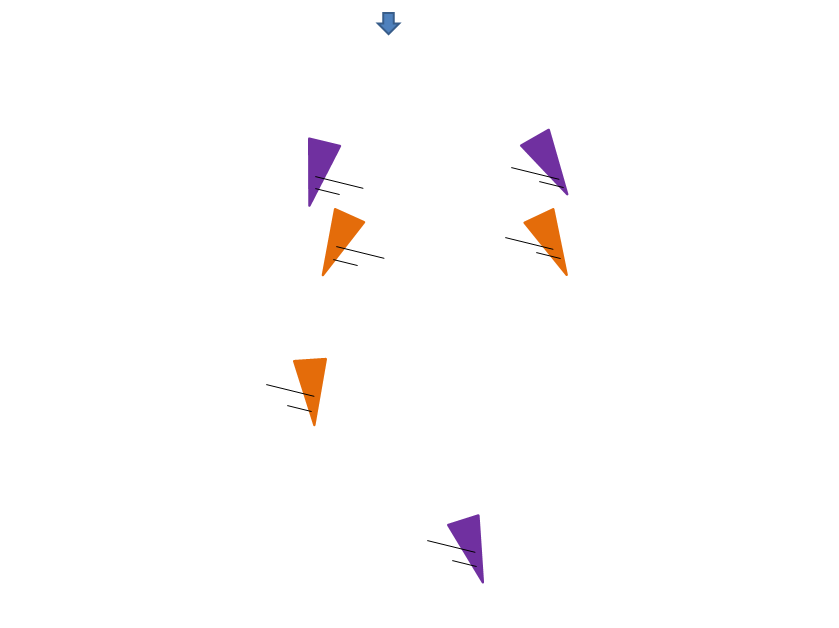
2-3 Wins:


2-3-4 vs. 1-5-6

When these two combinations square off, there is a constant struggle between 2-3-4 remaining balanced, and boats 5 and 6 unbalancing the 2-3-4, gaining control of one opposing boat, and putting them in last.

Boat 2: 

For the majority of the race, you are in a position where you are helping maintain balance between the pairs behind you, breaking ties whenever your teammates lose control of a boat, etc.

If you are in the 2 spot immediately around the mark, your role will change slightly.  In order to keep the race moving forward, you are in charge of protecting boat 4 from the trailing boats.

Boat 3: 

For the majority of the race, your job is to gain control of and balance boat 5.  Bring boat 5 towards boat 6 as often as possible by ragging on boat 5 whenever they sail away from boat 6, and pinning her at full speed when you sail towards boat 6.

If you are in the 3 spot immediately around the mark, your role will change slightly.  In order to keep the race moving forward, you are in charge of protecting boat 4 from the trailing boats.

Boat 4:

For the majority of the race, your job is to gain control of and balance boat 6.  Bring boat 6 towards boat 5 as often as possible by ragging on boat 6 whenever they sail away from boat 5, and pinning her at full speed when you sail towards boat 5.

If you are in the 4 spot immediately around the mark, your role will change slightly.  You will sail dead downwind, pushing the race forward much more quickly, forcing boats 5 and 6 into the control of your teammates.  When you eventually move into the 2 spot, you will assume that role.

2-3-4 Sailing Downwind


--
Boat 1:

You mostly have to remain patient, staying relatively close on upwind legs, preventing boat 2 from helping her teammates whenever possible. Set leeward mark traps to bring the group together, and possibly break up the 2-3-4.  If you try to do too much, particularly downwind, you will risk losing the 1st, and will leave an opportunity for the other team to move to an easy Play 1.

Ultimately, your largest priority is holding onto the 1st, while staying close enough to occupy boat 2, and keep them from doing their job whenever possible.

Boat 5:

You are working with boat 6 to catch one boat from the other team, quickly putting them in last.  Look for any and all opportunities to get the other team unbalanced.  Split with your teammate whenever possible, forcing them to work to stay in a 2-3-4.  On downwind legs, you will sail high to force an opponent to sail a lot of distance to control you.  This will give your teammate an opportunity to go low and pass one of the boats on the other team.

Boat 6:

Your job is similar to boat 5’s.  You will be the low boat in a high/low downwind.  Upwind, when you split up, force the boat that covers you to do a bunch of tacks, or anything else you can do to slow them down.  This will give your teammate an opportunity to pass the boat covering you, and you will have a chance to run a pass back from there.

See you on the water,

Zim Coach

Tuesday, March 19, 2013

Mitch Hall on Coaching Team Racing


Name: Mitch Hall

School/Title: College of Charleston/Assistant Coach

College of Charleston Sailing Team: http://bit.ly/CofCSailing

College of Charleston Sailing Team on Facebook: http://bit.ly/CofCSailingFB

Can you speak to what spring semester is like for college sailors? How does it differ from the fall?

Spring semester is more team racing oriented, where you work towards team racing nationals in May. The fall is all about fleet racing.  At College of Charleston, we like to focus on the fundamentals of team racing.  We won’t run any starts, or sail any races, until we feel comfortable in every play and every position on the course.

What does team racing do for you as a sailor moving forward from college sailing?

The most exciting aspects of team racing are how it implements the rules, boat speed, and boat handling at the same time.  To be successful, you have to be good at all three.  Team racing also emphasizes team work.  You can be the fastest boat on the entire race course, but your team won’t win unless you work together, and execute plays.

In today’s sailing world, there are actually a lot of ways to stay involved in team racing after college.  There are a lot of large regattas like the Hinman, Charles River Team Race, Morgan Cup, and a few more in the New England area that a lot of college sailors and ex-college sailors take advantage of, and compete in every year.

What qualities and skills make a good team racer?

Aside from the actual sailing skills, having the ability to identify and analyze certain situations quickly is critical.  Situations unfold in the blink of an eye, and you have to adapt without hesitation.  Confidence in your abilities is another important attribute.  If you are confident, you will know what to do in any situation without hesitation.  The person, who has this confidence and does not hesitate, can usually take advantage of a situation.  Lastly, it’s good to have the mindset and understanding that situations are always changing, and a race is never over until you cross the finish line.

What separates a good team racing team from a phenomenal team racing team?

Last year’s Team Racing National Championship was very competitive.  To give you an idea, I think we won the regatta with three or four losses.  Georgetown, who we struggled against all year, didn’t make the final four.  It’s always anyone’s championship.  Basically, any team that steps up, starts well, manages races, and can stay in control from start to finish is going to take it.

What do you feel are the most effective team racing drills?

Having a complete understanding of the rules is essential before you get into on the water drills.  One of the most effective drills we use, after we understand the rules, is the box drill.  Essentially, you set up four marks like a box, and continuously practice pass backs on each leg.  We always do this with simple three boat pass backs to get people in the mindset of team racing, before you get into any combinations or plays.

What are the biggest mistakes made by less experienced team racing teams?

I see a lot of people get overly aggressive at the start, and lose track of time in the process.  This obviously leads to a lot of poor starts, which really hurts teams during short races.  We really focus on making sure we have all 3 boats on the line at go.  It substantially increases your odds of winning races.

How do you balance all of the different personalities you see on a team race team?

We have a great group of sailors here, who are all working towards a common goal.  Having that goal helps a lot.  At the end of the day, though we all have different methods, we are working towards the same outcome.  We all end up falling on common ground.

Do you mix and match teams at practice, or do you always keep your top group together? Why?

Our teams all stay together as much as possible.  We do this because communication is so important.  You have to communicate all the time, and sometimes without saying anything.  The more you sail with each other, the easier that is to accomplish.

When you have multiple boats competing for the third spot on the team, what stands out to you about a sailor that helps make that decision for you?

Fortunately, we have not seen many of those situations since I started working here.  Seniority is a big factor in that decision.  Having someone with more experience is crucial to making all the right decisions, and we would want that person in the open spot.  At the same time, you want to continue to grow and develop your younger sailors, as they are the future of your program.  You don’t want to spend too much time and effort in developing someone who won’t be at the school next semester.

What things are not coached enough in team racing?

College sailing goes by really quickly.  So much time and effort are put into results.  You need to enjoy the experience, and keep a positive attitude.  If you don’t like what you are doing, you will not do well at it.  We like to stress a positive attitude for team racing at College of Charleston.  This is definitely not coached enough.

Mitch Hall

Thursday, March 14, 2013

Perfecting the Pin in Team Racing


There are many ways to slow another boat in team racing, but none is as disruptive to an opposing team as pinning.  Pinning is the act of putting your boat in a position that prevents another boat from tacking upwind.  With both boats constantly changing speeds during a pin, it is very difficult to maintain a pin on someone for a significant length of time.  To do so, you must have superior boat speed, boat handling, acceleration, and deceleration abilities over the boat you are attempting to pin.

When is Pinning Most Effective?

Pinning is most effective in any situation where you want to prevent another boat from tacking.  The first level of pinning is performed around lay lines or near the finish line.  In these situations, you can “kill” another boat.  “Killing” another boat refers to preventing a boat from tacking at all costs.  In most situations, the boat you are pinning has run out of room, and only needs to cross through your boat to get to the starting line or windward mark.  This type of pinning is exclusively about keeping the other boat from tacking.  Since they have run out of room to go forward, ragging on them to slow them down adds nothing to what you are trying to do.

The second level of pinning happens in the first 95% of a windward leg of team racing.  During this time period, you want the ability to prevent another boat from tacking, while simultaneously slowing them down.  Thus, you need to put your boat in a position where you can rag your jib on them in addition to preventing them from tacking.  This will allow you to keep another boat in one place and slow them down for the duration of the windward leg.  Furthermore, it will prevent that boat from tacking to get to their help, and a teammate will have to come back to spring them.  This causes considerable disruption to an opposing team during a race.  The ideal position to maintain, when executing this type of pin, is lining up your boat’s stern with the other boat’s windward side stay.  If you are forward of this, you risk letting them slip behind you with a tack in open water or during a back door pass back.  If you are aft of this point, you will have trouble ragging on them, and are more vulnerable to a front door pass back from the other team.  

The third level of pinning is the most advanced in terms of strategy.  It is similar in execution to the second level, but is done for a different reason.  The goal of this type of pinning is to force someone to sail towards an unfavorable wind shift or current line.  With all of the things you have to think about in team racing, this is very difficult to process in the middle of a race.  However, the reward is substantial if the wind shift or current differential is large.  Typically, this is much more likely to happen by pure happenstance, rather than performed with purposeful execution.  In this type of pin, it is additionally ideal to slow the other boat via ragging.  However, if you get in a crunch, it is more important that they sail towards the non-favored side of the course than they just go slow.


Quick Tips

Adjusting your Position in a Pin:

Most of the time, you want your boat in the position where you can both rag on and pin another boat.  The margin for error in maintaining this position is very narrow.  Thus, it is somewhat vulnerable to the other boat slipping away with a tack on its own, or via a back door pass back.  As you get closer to a lay line, it is prudent to move your position back on the other boat, where you have a much wider margin for error.  This way, it will take much more work for the other boat to get free of you and tack.  There is no perfect place to line up for this, but, as you get closer to the lay line, you want to encourage the boat to try to sail in front of you and tack rather than try to go behind you.  It is sometimes ok to let their bow move even with yours once you get to the lay line.  This way you force them to sail forward for a longer period of time, and you can tack away if they start to pinch you off.  Also, if they get really desperate and attempt to jibe away, you will have a better shot at preventing this, if you are further back on their boat.

The Dive:

When you turn your boat down in order to pin another boat, it is important not to dive too quickly.  Many sailors will turn hard and either miscalculate the angle of approach, or lose enough speed when they head up again, that they will prolong the amount of time it takes to get into a ragging position, or they will get pinched off by the other boat.  If possible, take a more subtle approach when diving down to pin another boat.


Slowing Down in a Hurry:

If you start to move too far forward of the boat you are pinning, you risk letting them tack out of the pin and sail free from you.  As you are already ragging, pull harder on the main and move the tiller back and forth to slow the boat down.  If you point too far to windward to slow your boat, you will actually open up the gap for the pinned boat to tack out.

Prolonging a Front Door Pass Back:

Most times when you are pinning a boat, one of that boat’s teammates will come to help.  This is when positioning is most critical.  No matter who you race against, if the other person starts to rag on you while you are pinning one of his or her teammates, you will ALWAYS lose the other boat.  Maintaining control on that boat is no longer the goal for you.  The new goal is to make that pass back take as long as possible.  Thus, ideal position remains where your stern lines up with the other boat’s side stay.  While this remains the ideal position, you want to avoid the back door pass back at all costs, and force the other boat to sail ahead of you and cross.  This will take longer and cause much more disruption to the other team.

Speeding up the Process:

If you are either the pinned boat, or the boat coming to spring the pinned boat, you need to act quickly.  If the back door pass back is immediately there, go for it (DO NOT WASTE TIME IF IT IS NOT THERE IMMEDIATELY!!!).  If it’s not, you both have to work together to get the pass back done quickly.  The rescue boat should go well forward and on top of the pinning boat while ragging hard and cranking on the main.  The boat that is pinned should sail as fast as they can, as if there were no one on top of them.  DO NOTHING TO SLOW YOUR BOAT DOWN!  Do not pinch, feather the other boat, etc.  If you go fast, your teammate will spring you in no time at all.  The opposing boat will tack away once you are sprung, your teammate will cover, and the race continues.

Perfect vs. Perfect:


In good team racing, everyone knows what is going to happen in a given situation.  Succeeding in team racing is about performing your job, in that situation, better than the other boats perform their jobs.

See you on the water,

Zim Coach

Tuesday, March 12, 2013

Effective Ragging Technique


One of the important technical skills in team racing is the ability to slow down and control an opponent’s speed via your own sails.  The most effective technique used to do this is known as “Ragging”.  For those who do not know what ragging is, it is not the same as pinning another boat, though ragging can play a role in effective pinning techniques.  More precisely, ragging is the act of blocking an opponent’s wind as you sail upwind, by letting the jib luff fully and keeping the main trimmed in.  While most team racers know what ragging is, there are a few techniques to ragging that separate the most effective team racers from everyone else.

Why is Ragging Effective?

The main and the jib play two separate roles when you are ragging.  The main, as it is the larger sail, does the most in terms of blocking or disrupting an opponent’s sail flow.  This is important to keep in mind, as the main’s importance is often overlooked while ragging.  The jib’s role is twofold.  By luffing the jib, you are able to create much more distortion to the wind going to your opponent’s sails.  This distortion will prevent the wind that reaches the boat you are ragging on from coming in at a steady flow or angle.  Luffing your jib in this manner is also important for slowing your boat down.  This is important because, if you are ragging effectively, the person you are ragging on will slow down as much as you do.  Thus, the slower you are able to go, the slower the other boat will go, and the more effective you are at balancing and controlling any upwind situation in a race.

Now that you have an idea of why ragging is effective as a team racing technique, here are a few things to keep in mind for effective execution:

Position:

Position is a very simple adjustment that you can make to go from moderately slowing another boat, to stopping them dead in the water.  Unless you need to pin someone, the biggest mistake you can make while ragging is not getting forward enough on your target.  As a general rule, the further forward you are on an opposing boat, the more effective you are when ragging.  For example, many sailors will start ragging as soon as their bow or jib is fully ahead of the boat they are attempting to rag on.  This will mostly just slow your boat down, and won’t slow the other boat enough to keep them from sailing out from beneath you.  That may help in pinning a boat, but not ragging on them to slow them down.  To correct this, it is important get to the point where both of your sails are in a position to affect your opponent’s sails.  As a general rule of thumb, you should get the boat AT LEAST to where your stern lines up with the other boat’s windward side stay before releasing the jib.  This an effective position if you want to slow them down, and do not want them to tack.  If the goal is just to slow them down or force them to tack, getting to the point where your stern is just forward of their bow is even more effective.


The Main:

As mentioned earlier, the main serves as the largest barrier between the wind and the boat you are ragging on.  Remember, the wind does not get to the other boat until it flows over your leech, where it will start to bend back toward its natural direction.  Thus, your leech shape and tension will have a dramatic impact on the wind that your opponent’s boat sees.  So, if you ease the main out, the wind will flow more quickly and with less disruption over your sail before reaching your opponent’s sails.  As you would like to cause more disruption and slower wind flow to that boat’s sails, pulling in the main harder will close off the leech, shutting off that wind flow and causing significant disruption to your opponent’s sails.  Therefore, while ragging, it is important to pull on the main hard in order to increase your effectiveness in slowing another boat.


The Void Technique:

Sometimes you will see a sailor forgo pulling hard on the mainsheet, and simply pull the boom far to windward.  This is an extremely effective way to get another boat to stop dead in the water.  Pulling the boom to windward in this manner can create a large void where there is little to no wind getting to another boat’s sails.

This technique is not without its shortcomings.  First of all, in heavy air, you will struggle to do this without heeling to leeward.  When you heel to leeward, not only will you slide sideways, but you will spill most of that wind you are attempting to disrupt, and it won’t affect your opponent as much as you could by hiking hard and trimming in on the mainsheet.

Furthermore, when executing this technique, you do risk completely stopping your own boat, and will at least lose the ability to tack or accelerate quickly.  Thus, if you anticipate your opponent tacking away, do not hold the boom to windward for too long at one time.  You may have to do a series of shorter holds instead.

If you are in a pinning position, you have less to worry about in terms of keeping up with a boat that tacks away, but, unless it is very light air, you do have to remain cautious of sliding down into that boat.  Thus, only use this technique in a pinning position when it is light air, and when your opponent cannot legally take you head to wind.

The ideal time to use the void technique is on lay lines, where it does not make sense for the other boat to tack away (If they do you can simply tack and pin them), and where you do not have to sail overlapped and risk fouling.


Heel and Angle:

By heeling the boat to windward, you will create an even larger hole or void for your opponent while ragging.  Heeling to leeward will spill more breeze to your opponent, decreasing the size of the hole they have to sail through.  Thus, in heavy air, it is important to hike very hard while ragging, or you will struggle to effectively slow your opponent down.  Furthermore, it is important to remain at a close hauled angle while ragging.  Pointing your boat further into the wind allows more wind to pass around your sails and reach the boat in your shadow.


See you on the water,

Zim Coach


Monday, March 11, 2013

Two Golden Rules of Team Racing


As many high school and collegiate programs hit the water to start the Spring Sailing Season, the focus turns to team racing.  Practices this time of year are often precluded and concluded by long chalk talks on executing plays, such as a 1-4-5 versus a 2-3-6, and sailors will spend plenty of time outside practice getting to know all of the proper calls, lingo, and the role of each boat in a given play.  All of this is essential to better understanding team racing, and why each boat does what they do during a specific play.  However, studying all of these plays off the water usually does not immediately translate to proper execution.  This will take hours of repetition in every possible scenario to engrain a situation into a sailor’s team racing knowledge.  At this time of year, sailors’ heads are filled to the brim with having to know each boat’s role in every play, brushing up on the team racing rules, and learning their specific role on their team racing team.  This is often a lot to chew on in a very brief period of time.  When situations and positions change frequently on the water, most of the time, AT LEAST one boat loses track of their position and role in a play.  When this happens, the race can go from tightly contested to completely over in a matter of seconds.  When looking back in retrospect the race is won or lost because one or two of the two most important team racing rules are violated.

Rule #1: The Play is Always Behind You*

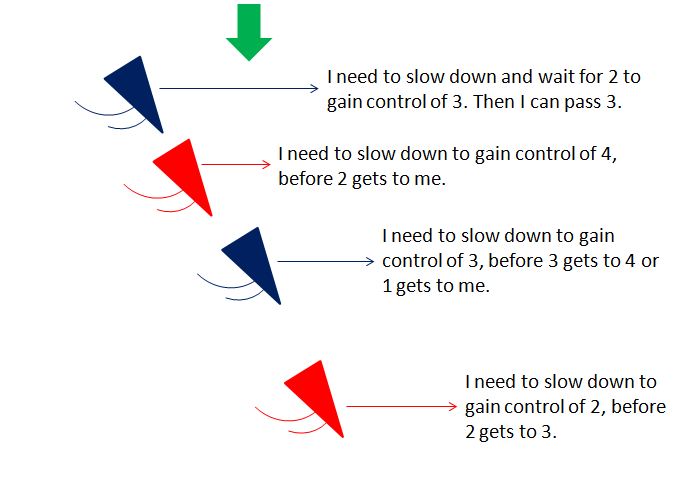
This is probably the biggest mistake in team racing.  Unlike fleet racing, which is about how fast you can go, team racing is about how good you are at controlling that speed.  Team racing is not won by going past other boats, but about slowing down to get control of the boat behind you before the boat in front of you takes control of you.  For example, in a 1-3 versus a 2-4, the 2 boat needs to get control of the 3 boat before the 1 boat gains control of the 2 boat.  Whoever does that first will have control of the race.

Often times you see sailors get away with sailing right past boats instead of taking control of the boats behind them.  This is only possible with a massive disparity in talent, or because someone wasn’t paying attention.  This will never work at the top levels of high school or college team racing.  Even if you don’t know the play, abiding by this rule will keep you from making a serious mistake almost 100% of the time.  When in doubt, the play is behind you!


*Exceptions to the Rule

The only times that you actively chase a boat in team racing are when you are losing to a 1-2, a 1-2-3, you are in the 6, or you and a teammate are both 5-6.  Essentially, whenever you are in last, or need to break up a 1-2 or 1-2-3, you are supposed to chase boats.  The last quasi-exception is in a 1-4-5, where the 5 boat is gapping the 6.  In this situation, the 4 is not looking to make a play behind them, and should push the opposing team forward.  However, the goal here is not necessarily to pass boats, but to help push the race forward to the finish line with the help of the 1 boat.  Furthermore, if the 5 loses control of the 6, the 4 needs the ability to get to the new 5 as quickly as possible.

The common retort to this rule is that you should actively pass a boat when your teammate is boosting you in a play.  While this is correct, the important thing to take away is that you should not actively try to pass that boat until your teammate has control of them, and is executing a pass back.  If you are trying to sail by this boat before your teammate has control, this boat will gain control of you first, and prevent your teammate from boosting you forward, making it easier for the other team to gain control of the race.

Rule #2: The Sailor Ahead does the Work*

This rule is often confusing to new team racers, but is important for execution and maintaining control of a race.  The basic rule is that the boat that is further ahead in a situation is supposed to take control of the closest trailing opposing boat.  For example, in a 1-2-6 versus a 3-4-5, the 1 boat is in charge of controlling the 3 boat, and the 2 boat is in charge of controlling the 4 boat.  The reason for this is that a boat further ahead will have an easier time maintaining control and of a trailing boat, it makes it easier for a team to stay balanced, and this will prevent the trailing boats from slowing down or gaining control of the race.  This is easiest to understand if you consider four boats going downwind in a 1-2 vs. a 3-4.  In this situation, the 3 boat will attempt to slow down the 2 boat and make 2 sail far out of the way to keep its air clear, and the 2 will have expend as much effort protecting itself as it will gaining control of that boat.  During this time, the 1 boat is doing nothing, and the 4 will have little to no trouble moving into the 2 spot.  Now, the team that was in a 1-2 is susceptible to moving into a 1-4, and losing control of the race.


Now consider the same situation, where the 1 boat takes the 3 boat and the 2 boat takes the 4 boat.  In this situation, each boat will have control of a boat, and it is simply a matter of balancing to maintain the 1-2 before the upwind leg.  Thus, there is never a time where the two opposing boats are going up against just one of the leading boats.  It is important to remember that you do not have to overlap a boat to have control of them.  You must simply put yourself in a position where you are able to dictate that boat’s speed or direction.  Thus, the trick for the 1 boat is to slow down just enough so that the 2 boat can sail away from the 3 boat without the 3 chasing after the 2.  If the 3 decides to continue to cover, the 1 is able to jibe to starboard, and 3 forfeits control and is taken completely out of the downwind leg.  Ultimately, boat 1 forces boat 3 to chase after a boat that is further away, or is taken completely out of the race.


*Exceptions to the Rule

In a 1-4-5, the 5 boat’s job is to gap the 6.  Initially, depending on how “in control” the 5 boat is of the 6 boat, the 4 boat may have to step in early, take control of the 5 spot, and then gap from this point forward.
The other exception is in a 1-2-3, where the 3 boat is in charge of taking the rest of next trailing boat(s), either slowing them down at marks, or sailing one of them (preferably boat 4) into last place.

While these two rules are not substitutes for knowing the plays, adhering to both will keep you from making the two biggest mistakes made by teams on the water.  At the very least, using these rules will buy you some time in a tough situation, until you can determine exactly what your boat’s role is in a given play.

See you on the water,

Zim Coach